Blog
C60 Lifespan Studies: The Rat Study vs the Mouse Study, Side by Side
Two studies dominate the C60 story. In 2012, a rat study with 6 animals per group reported much longer lifespans with C60 in olive oil (Baati et al., 2012). In 2021, a larger mouse study found no lifespan or healthspan benefit, and light-exposed C60 oil turned toxic (Grohn et al., 2021). Neither study used dogs, ESS60 or Mighty K9.
Written by the Mighty K9 editorial teamUpdated · 9 min read

The question
Does C60 make animals live longer?
One small study said yes and one larger study said no. That is the honest summary of C60 and lifespan in 2026.
The "yes" came from a rat study published in 2012 (Baati et al., 2012). It is the study behind almost every C60 oil on the market, including the 0.8 mg per mL strength in Mighty K9. The "no" came from a mouse study published in 2021 (Grohn et al., 2021). Both used C60 dissolved in olive oil.
When two studies disagree, the details decide which one to weigh more. So here they are, row by row.
Compared
How do the rat and mouse C60 studies compare?
The mouse study was larger, tested more conditions and found no benefit. The rat study was smaller and called itself exploratory.
| Detail | Baati et al., 2012 | Grohn et al., 2021 |
|---|---|---|
| Animals | Rats | Mice (C57BL/6J; aged CB6F1 in a second test) |
| Number | 6 per group, 3 groups (water, olive oil, C60 in olive oil) | 66 in the main lifespan test, both sexes |
| Dose | 1.7 mg/kg at 0.8 mg/mL, on a tapering schedule | C60 in olive oil; 1.7 mg/kg in the aged-mouse test |
| Route | By mouth | By mouth in the main test; injection in the aged-mouse test |
| Lifespan result | Median about 42 months vs 26 (olive oil) and 22 (water) | No significant benefit; aged mice 144 vs 145 weeks |
| Healthspan | Not the main focus | No benefit found |
| Safety finding | No chronic toxicity reported | Light-exposed C60 oil turned toxic |
| Authors' own view | Exploratory; needs larger confirmation | Does not extend lifespan in mice |
The rat dosing schedule tapered: daily for one week, weekly until month 2, then every two weeks (Baati et al., 2012). It was never a daily dose for life, which is how C60 oils are usually sold.
2012
What did the 2012 rat study actually find?
The rats given C60 in olive oil had an estimated median lifespan of about 42 months. Rats given plain olive oil lived about 26 months, and rats given water about 22 (Baati et al., 2012).
Those are striking numbers, and they explain the hype. Yet the study had just 18 rats in total. The authors called it exploratory and said larger studies were needed. Notice, too, that plain olive oil also beat water by about four months, so the oil itself may have played a part.
It was the first report of its kind, it was dramatic, and it used a recipe anyone could copy. That made it ideal for marketing. None of that makes it more likely to be true.
2021
What did the 2021 mouse study find?
It found no lifespan or healthspan benefit from C60 in olive oil (Grohn et al., 2021). The team tested mice that started C60 in adulthood and others that started in old age.
In a second test, aged mice got 1.7 mg/kg, the same dose as the rats, by injection. Their median survival was 144 weeks, against 145 weeks for mice given plain olive oil. That is no difference at all.
The study turned up two more findings that matter for anyone buying C60 oil:
- C60 oil left in light for 4 to 8 days became toxic, killing mice within 14 days of a single injected dose.
- C60 oils bought online varied in strength, impurities and antioxidant activity.
Mice are not dogs either. But a larger, more careful study that fails to repeat a result is a strong warning sign.
Reading research
Why can small animal studies mislead?
With only a few animals, chance alone can produce big differences. The first exciting result is often the largest one ever reported.
A few animals swing the median
With 6 rats in a group, the median sits between the third and fourth animal. One early death or one long life moves it a lot.
No repeat, no rule
A finding becomes trustworthy when other teams get it again. The larger mouse study did not.
Products are not the study
Commercial C60 oils varied in quality (Grohn et al., 2021). A bottle on a shelf may not match what any lab tested.
Rodents are not dogs
Rats and mice handle food, fat and chemicals differently from dogs. Neither study looked at joints at all.
Try Mighty K9 for 30 days2 mL a day · $64.99 a bottle · free shipping over $100 · empty bottles OK for refunds
Order nowTo scale
How does a Mighty K9 serving compare with the rat dose?
For most dogs, one serving is far below the rat-study dose per kg of body weight. Each 2 mL serving holds 1.6 mg of ESS60, so the dose per kg shrinks as the dog gets bigger.
Only an animal of about 1 kg (2 lb) would come close to the rat dose on a serving day. That gap is not a reason to give more. No one has shown that the rat dose helps dogs, or that it is safe for them over months.
What it means
What do these studies mean for my dog?
Do not buy for lifespan
No study shows C60 helps any dog live longer. The best evidence in mice says it does not.
Keep the label serving
Do not raise the dose to chase the rat numbers. Ask your vet before any change.
Store it dark
Keep the amber bottle capped and out of light and heat, given the mouse findings.
Lean on proven basics
For joints, weight control, exercise and vet care come first, and omega-3 fish oil has the most supplement evidence (Barbeau-Gregoire et al., 2022).
Fair view
Is there any reason to try C60 for a dog?
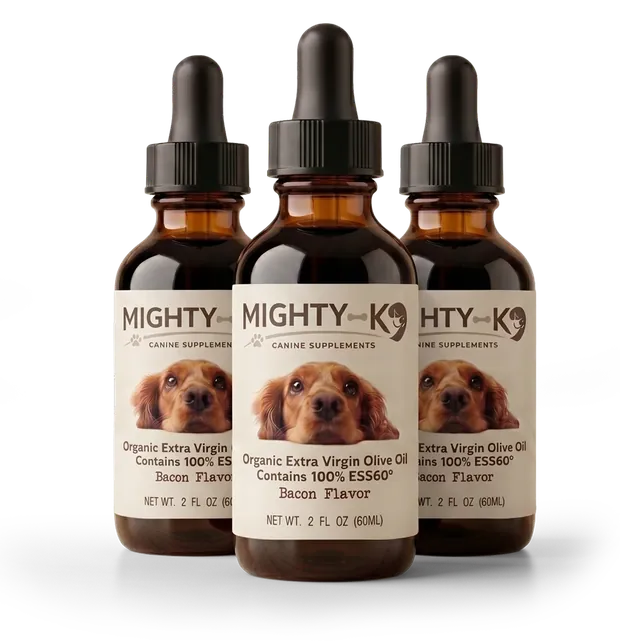
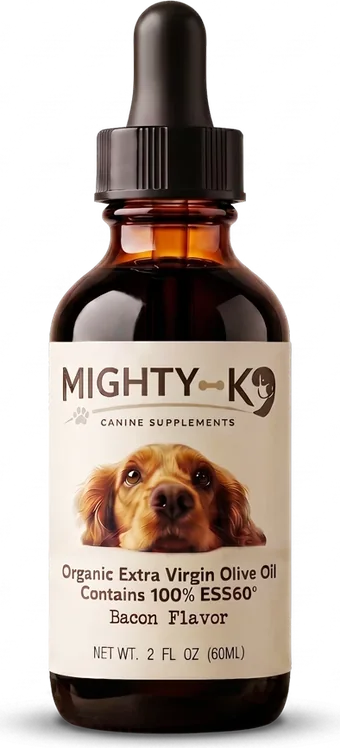
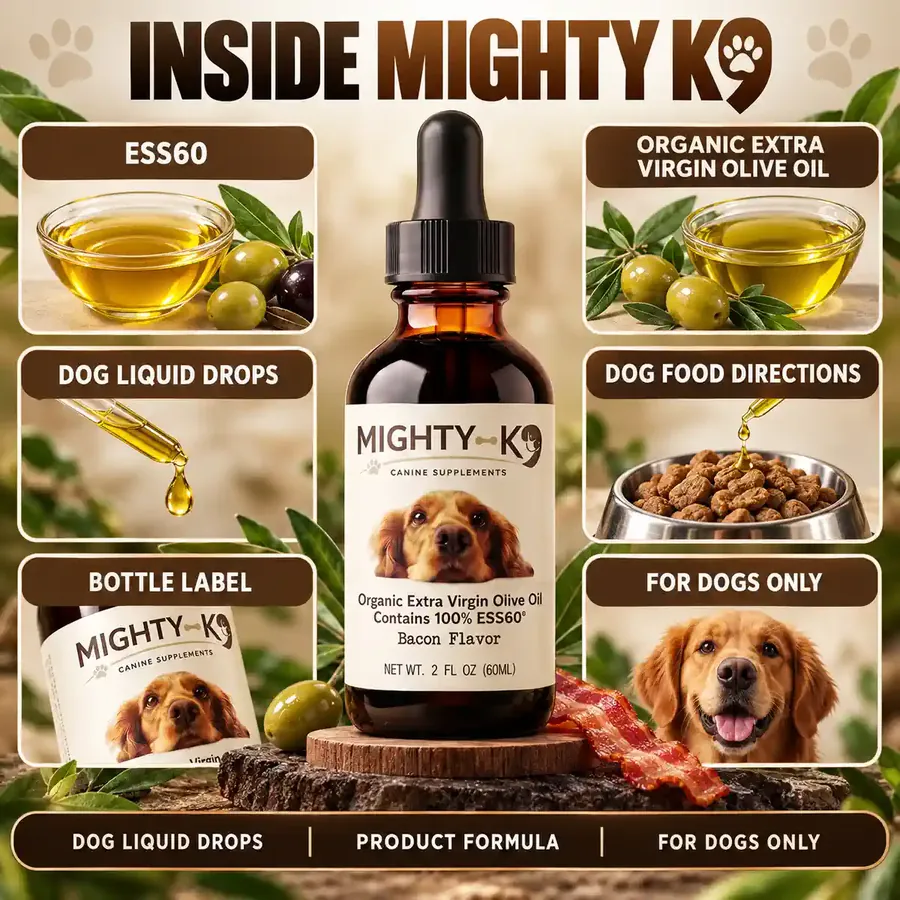
Some owners will try it anyway, and that is their choice to make with a vet. The product is simple: olive oil, ESS60 and bacon flavor, with the C60 amount and calories printed on the label.
The sales page links C60 to "cellular aging" and joint comfort. Those are claims, not study results in dogs. If you try it, use the 30-day guarantee window to judge it honestly, and keep a written log. Our claims vs evidence page lines up each claim with what the research shows.
FAQ
C60 lifespan studies: questions owners ask
Did C60 really double the lifespan of rats?
A small 2012 study reported median lifespans of about 42 months for rats given C60 in olive oil versus 22 months for rats given water (Baati et al., 2012). There were only 6 rats per group, the authors called it exploratory, and a larger mouse study later found no lifespan benefit.
Why did the mouse study find no benefit?
Nobody knows for sure. The mouse study was larger and tested different ages and routes, and found no lifespan or healthspan gain (Grohn et al., 2021). The simplest explanation is that the small rat result was partly chance, which is why repeat studies matter.
Has C60 been tested for lifespan in dogs?
No. No lifespan study of C60 has been done in dogs. The only dog study we found gave 6 beagles C60 in grape seed oil for 9 days and measured one blood marker (Hui et al., 2023). It did not look at lifespan or joints.
Is the Mighty K9 dose the same as the rat study?
The strength is the same, 0.8 mg per mL, but the dose per kg is not. One 2 mL serving gives a 10 kg (22 lb) dog about 0.16 mg/kg, roughly a tenth of the 1.7 mg/kg the rats got. Do not raise the serving to match it.
What made C60 oil toxic in the mouse study?
Light. C60 in olive oil that sat in light for 4 to 8 days caused deaths in mice within 14 days of one injected dose (Grohn et al., 2021). Fresh oil kept from light was not acutely toxic. Store any C60 product capped, dark and cool.
Which C60 study should I trust more?
Most scientists give more weight to larger studies and to results that other teams can repeat. On both counts, the 2021 mouse study is stronger than the 2012 rat study. Neither one tested dogs, so neither settles the question for your pet.
Who wrote this
Written and reviewed by
Plain-language pages built from the bottle label, the sales page and linked veterinary and government sources.
Last updated . Read our editorial standards and how we check reviews. This website is run by a U.S. retail partner, not by the manufacturer. This site is paid a commission when you buy through our order links.
Keep reading
More about Mighty K9

U.S. retail partner for Mighty K9
Ready to try Mighty K9?
Pick a pack. One 2 mL serving a day in your dog's food, and every pack covers the 30-day money-back window.
- Secure checkout
- 30-day money-back
- Ships from the U.S.